
Pros and Cons of Video Gaming:
Technology and gaming have undeniably become part of our lives. Gaming especially is misunderstood by many parents and there is a constant debate whether games are good or bad, it can be both, but if played in moderation, gaming can assist children in developing certain life skills. Many parents say there are so many bad things about games, but there is much good stuff as well. The right games used in the right way can inspire learning, boost visual skills, improve coordination, and lift our mood. Oh, and some children can just become a bit nicer too.
Both Gaming and technologically as a whole have undeniably, unequivocally become intrinsic parts of our daily lives. Whilst the majority have accepted the latter without question (although, admittedly, maybe a bit of initial resistance), the former is often misunderstood – particularly by parents (and politicians).
The debate around whether video games are good or bad for children is as old as time, and both sides have their merits. Many detractors strongly advocate that gaming promotes violence and stunts creative growth, creating toxic communities which can often inflict both psychological and emotional damage on individuals far too young to adequately cope with it. On the other side of the spectrum, there is an argument to be made that the correct game used in the correct manner can inspire learning, improve hand-eye coordination, boost social skills, stimulate creativity and, of course, relieve stress.
We’ll aim to look at both sides to better understand the good, the bad and the ugly of Online Gaming…
Pros of Video Gaming:
- Certain Games Inspire Reading & Develop Interest/Concentration:
Games such as Age of Mythology, Civilisation, Age of Empires and even Assassins Creed go a long way towards education through playing. Studies show that by engaging and interacting with titles to foster intellectual thinking, children may learn through stimulus and be more reciprocal towards passive education. Even concepts such as engaging in real-world scenarios, building/following maps, adhering to instructions, following instructions or dealing with choices and consequences are all significant contributors towards improved decision making, maturity and management growth. Gaming lets children try new things without fear of making mistakes which is part of the game-learning process. Studies have also revealed that children who struggles with attention-deficit disorder and dyslexia who played video games, can improve their reading scores by helping them concentrate.
- It Develops Social Skills
Research indicates that finding likeminded people to connect and share with in a positive way is fundamental in the development of essential social skills in children. In fact, many kid Gamers were identified as being better at socialising and ranking high in collaborative/team components – even ordinarily shy ones who otherwise have difficulty fitting in. Rather than fuel the narrative of being an isolation activity which promote being antisocial, online Gaming enables communication, collaboration, and co-operation.
- Solve Problems, Think Strategically, Make Decisions:
Some video games include mandatory challenges to be figured out, while others are designed with complex puzzles and levels which take hours to solve. Thinking on your feet and improvising in a strategic environment is a skill which can easily translate to the real world. Most expert gamers can make choices and act faster while paying attention to multiple things at once. In fact, action games can train your kid to make quicker decisions without losing accuracy. Don’t believe us? They’ve been used to train soldiers, pilots, and surgeons. Yeah, that’s science for you.
There are a wealth of other skills certainly sharpened by playing games online. These include leadership, the sparking of creativity, enhanced memory, fine motor co-ordination, understanding healthy competition, mood enhancements, accomplishment, and other emotional benefits. What’s more, many elite players find doors opened for a career doing what they love while still in their teens – and the earning potential is huge.
Now, let’s look at the downsides:
We hate to admit it, but video games (like most things in life) do have some negative aspects – too much of a good thing and all that. Some of these can even have long term ramifications on both the development and physical strength of their victims – here are but a few.
- Self-isolation – and not the Covid kind.
Many kids thrive within a Gaming community, but some simply use it as a platform from which to further withdraw and play in isolation. It’s important for kids to still spend time with ‘real’ people in the real world, learn to interact with others, read social cues and make friends in new places. Gaming, as awesome as it is, is a purely digital experience – there needs to be adequate time to the world we actually live in as well.
- Difficulty paying attention
Some kids who have spent too much time playing games have been proven to display impulsive behaviour, often having difficulty paying attention to less stimulating (or, for lack of a better word, boring environments). It’s a natural reaction – how would you expect a child who’s used to a fast-paced, all-action combative environment to derive the same levels of excitement and adrenaline in Math class? As such, the recommended screen time for children over 6 is no more than an hour a day, with those below staying closer to 30. In fact, if you notice your kid constantly spending 2+ hours online, it’s advised to start asking why.
- Enforcing the Wrong Values:
There are many games wherein violence, vengeance and aggression are not just rewarded, but encouraged. Sure, it’s immensely satisfying to go full John Rambo on an NPC, but there are many titles where you take on the role of antagonist, and wherein assaulting innocent civilians with no consequence is actively encouraged. Furthermore, kids online can pick up bad language or behaviour and be encouraged to engage in trolling and bullying.
Some other common issues include Repetitive Stress Injuries, physical health issues due to forgetting to eat or snacking while staring at a screen, sleep deprivation, confusing fiction with reality, difficulty transitioning off games, relationship issues, low levels of empathy and a vastly reduced attention span.
FPB age ratings inform you at a glance
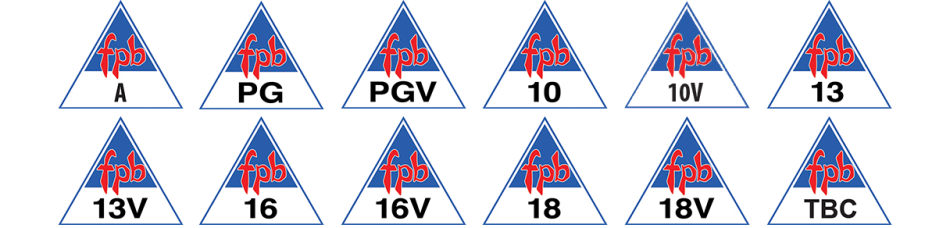
Under the FPB system, a game is categorized by age. Games can be further classified by descriptors including Drugs, Language (L), Nudity (N), Sex (S) and Violence (V). In more detail, games can have:
- – An Age Rating Icon, which shows for which age range the game is suitable. The age ratings range from A, PG, 10, 13, 16 and 18.
- – Game Descriptors, which advise you on the type of content contained in the game. The descriptors highlight seven types of content: Drugs, Language, Nudity, Prejudice, Sex (S), Violence (V), and Blasphemy (B).
Lastly, the Ugly:
Video game addiction can lead to several issues, wherein children need to spend more and more time playing to feel good and find themselves unable to quit. According to video game addiction statistics, as many as 12 percent of boys and 7 percent of girls are in fact addicted to gaming.
The negative effects of video games include effects on our mind, body relationships, job performance, and more. Here are some other common, ugly side effects of too much Gaming:
- Dopamine increases when dopamine levels become too high.
- Reduction in Motivation.
- Alexithymia and constant emotional suppression.
- Repetitive stress injuries and other health risks.
- Poor mental health such as irritability and anxiety are symptoms of withdrawal if unable to play video games.
- Relationship issues.
- Social disconnection.
- Exposure to toxic gaming environments.
- Poor academic or professional performance
If your child is regularly experiencing these feelings and behaviors and it’s already been going on for a while, it might be helpful to speak to a professional about what support they need.
Parents, gaming is no child’s play. You need to understand why your child plays video games and which types interest them. Parents must ensure that their children are safe and healthy, physically, emotionally, and mentally. Children are oblivious to risks, they just want to have fun. The important thing is to play responsibly and do everything in moderation. So, Mom and Dad, there are just a few things to consider regarding gaming for your children – and perhaps you too can learn a thing or two from them. Now, let your children go waste off some zombies and save the world – but why not give it a bash? You’re never too old to learn!
Resources:
https://gamequitters.com/video-game-addiction-statistics
https://www.psychologytoday.com/za/basics/video-game-addiction
https://www.mordorintelligence.com/industry-reports/africa-gaming-market
https://www.mordorintelligence.com/industry-reports/africa-gaming-market
https://www.statista.com/outlook/dmo/digital-media/video-games/south-africa
https://www.techfinancials.co.za/2021/01/10/the-african-gaming-industry-and-its-potential-growth/
https://www.youngminds.org.uk/parent/a-z-guide/gaming/
https://www.verywellfamily.com/best-video-games-for-kids-4705411T
https://theconversation.com/is-gaming-good-for-kids-153773
https://kidshealth.org/en/parents/good-gaming.html